

The Fight Response and Narcissistic Abuse
When anger, defensiveness, or emotional intensity become survival responses

\
When anger, defensiveness, or emotional intensity become survival responses
Many people associate trauma responses only with:
anxiety
shutdown
freezing
But trauma can also show up as:
anger,
defensiveness,
emotional intensity,
reactivity,
control,
or the urge to fight back.
This is often referred to as:
the fight response.
The fight response is not simply “being difficult” or “angry.”
It is a nervous system survival response that develops when the brain perceives:
danger
emotional threat
powerlessness
criticism
shame
or loss of safety.
In people who have experienced narcissistic abuse or emotionally unsafe relationships, the fight response can become especially activated.
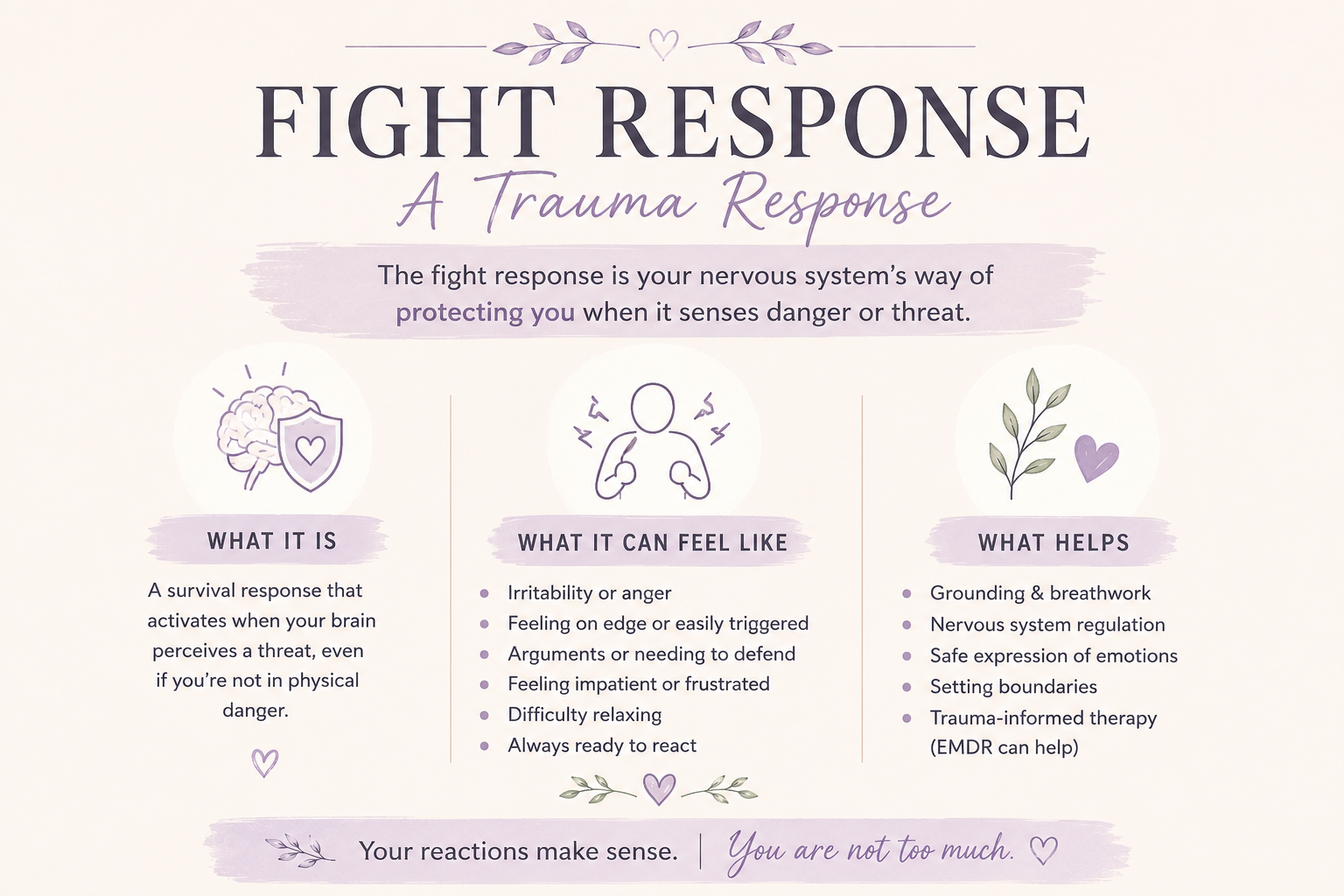
What is the fight response?
The fight response is one of the body’s automatic survival responses.
When the nervous system perceives threat, the body may prepare to:
defend
protect
regain control
or survive.
This can involve:
adrenaline activation
increased emotional intensity
anger
defensiveness
arguing
urgency
irritability
or emotional escalation.
The fight response is not always physical aggression.
For many people, it appears as:
emotional reactivity
sharp defensiveness
needing to explain
feeling easily triggered
emotional overwhelm
or intense anger when feeling invalidated, controlled, criticized, trapped, or emotionally unsafe.
The fight response in narcissistic abuse
Narcissistic abuse often creates chronic nervous system activation.
People may spend long periods feeling:
criticized
emotionally unsafe
invalidated
manipulated
controlled
blamed
or emotionally cornered.
Over time, the nervous system may become:
highly sensitized to emotional threat.
This can create:
emotional defensiveness
explosive emotional reactions
irritability
or a strong urge to protect yourself emotionally.
Many survivors eventually react strongly because:
their nervous system has spent so long trying to survive emotional danger.
The fight response in narcissistic abuse
Narcissistic abuse often creates chronic nervous system activation.
People may spend long periods feeling:
criticized
emotionally unsafe
invalidated
manipulated
controlled
blamed
gaslit
or emotionally cornered.
Over time, the nervous system may become:
highly sensitized to emotional threat.
This can create:
hypervigilance
emotional defensiveness
explosive emotional reactions
irritability
or a strong urge to protect yourself emotionally.
Many survivors eventually react strongly because:
their nervous system has spent so long trying to survive emotional danger.
Why survivors sometimes feel “angrier” over time
Many people entering or leaving narcissistic relationships notice:
increased anger
emotional intensity
frustration
resentment
or emotional exhaustion.
This does not automatically mean:
you are abusive.
Sometimes the nervous system has been:
chronically activated
emotionally suppressed
invalidated
or pushed beyond its limits for a long time.
What people sometimes call:
“reactive behaviour”
can occur when someone has spent prolonged periods in emotional survival mode.
This is not about excusing harmful behaviour.
But understanding trauma responses can reduce shame and help people better understand what their nervous system was trying to do.
What the fight response can feel like
The fight response may feel like:
intense defensiveness
feeling emotionally flooded
irritability
frustration
snapping quickly
urgency to explain yourself
anger when misunderstood
panic underneath anger
needing control to feel safe
feeling unable to calm down during conflict
racing thoughts
emotional overwhelm
or feeling constantly “on edge.”
Many people later feel:
guilt
shame
confusion
or fear about their reactions.
Especially if they were repeatedly told:
they were “too emotional”
“crazy”
“aggressive”
or “the problem.”
Fight response vs abuse
One of the most painful effects of narcissistic abuse is that survivors often begin questioning:
“Am I the abusive one?”
Especially after:
emotional reactivity
yelling
anger
emotional flooding
or reactive outbursts.
Trauma responses and abusive behaviour are not the same thing.
Abuse involves:
ongoing patterns of control
manipulation
coercion
intimidation
entitlement
lack of accountability
or intentional emotional harm.
Trauma responses are survival responses.
Many trauma survivors deeply fear hurting others, reflect on their behaviour, seek help, and feel remorse after emotional dysregulation.The nervous system underneath the fight response
Underneath the fight response is often:
fear
shame
helplessness
emotional pain
vulnerability
or terror of emotional unsafety.
For many people, anger becomes a protective emotion.
Especially when vulnerability previously led to:
rejection
humiliation
emotional invalidation
manipulation
Fight response and childhood trauma
The fight response may also develop in childhood environments involving:
emotional abuse
criticism
chaos
unpredictability
narcissistic family systems
emotional invalidation
bullying
or unsafe attachment relationships.
Children may learn:
emotional intensity is necessary for protection
anger creates safety
vulnerability is dangerous
or emotional defensiveness is required to survive.
Over time, these patterns can continue into:
adult relationships
conflict
work environments
and nervous system functioning.
Healing the fight response
Healing is not about shaming yourself for having survival responses.
Healing often involves:
increasing nervous system safety
understanding triggers
learning emotional regulation
rebuilding self-trust
processing trauma
strengthening boundaries
and developing relationships that feel emotionally safe and consistent.
Many people notice the fight response softens when the nervous system no longer feels:
chronically under threat.
EMDR and the fight response
EMDR therapy can help people process:
traumatic memories
emotional triggers
attachment wounds
narcissistic abuse
hypervigilance
and nervous system activation connected to the fight response.
As unresolved trauma becomes reprocessed, many people notice:
reduced emotional flooding
less reactivity
improved emotional regulation
and greater ability to feel safe during conflict and connection.
You are not “too much”
Survival responses develop for reasons.
Your nervous system learned how to protect you in environments that may not have felt emotionally safe.
Healing is not about becoming emotionless.
It is about helping the nervous system learn:
safety no longer requires constant survival mode.