
The Fawn Response and Narcissistic Abuse
When pleasing, appeasing, or over-explaining become survival responses

\
When pleasing, appeasing, or over-explaining become survival responses
Many people who have experienced narcissistic abuse or emotionally unsafe relationships blame themselves for:
people-pleasing
apologizing quickly
avoiding conflict
over-explaining
trying to keep the peace
feeling responsible for someone else’s emotions
or abandoning their own needs to maintain connection
But these patterns are often not personality flaws.
They may be part of a nervous system survival response called:
the fawn response.
The fawn response develops when the nervous system learns that staying connected, agreeable, helpful, compliant, or emotionally attuned to others may reduce danger, conflict, rejection, abandonment, or emotional harm.
What is the fawn response?
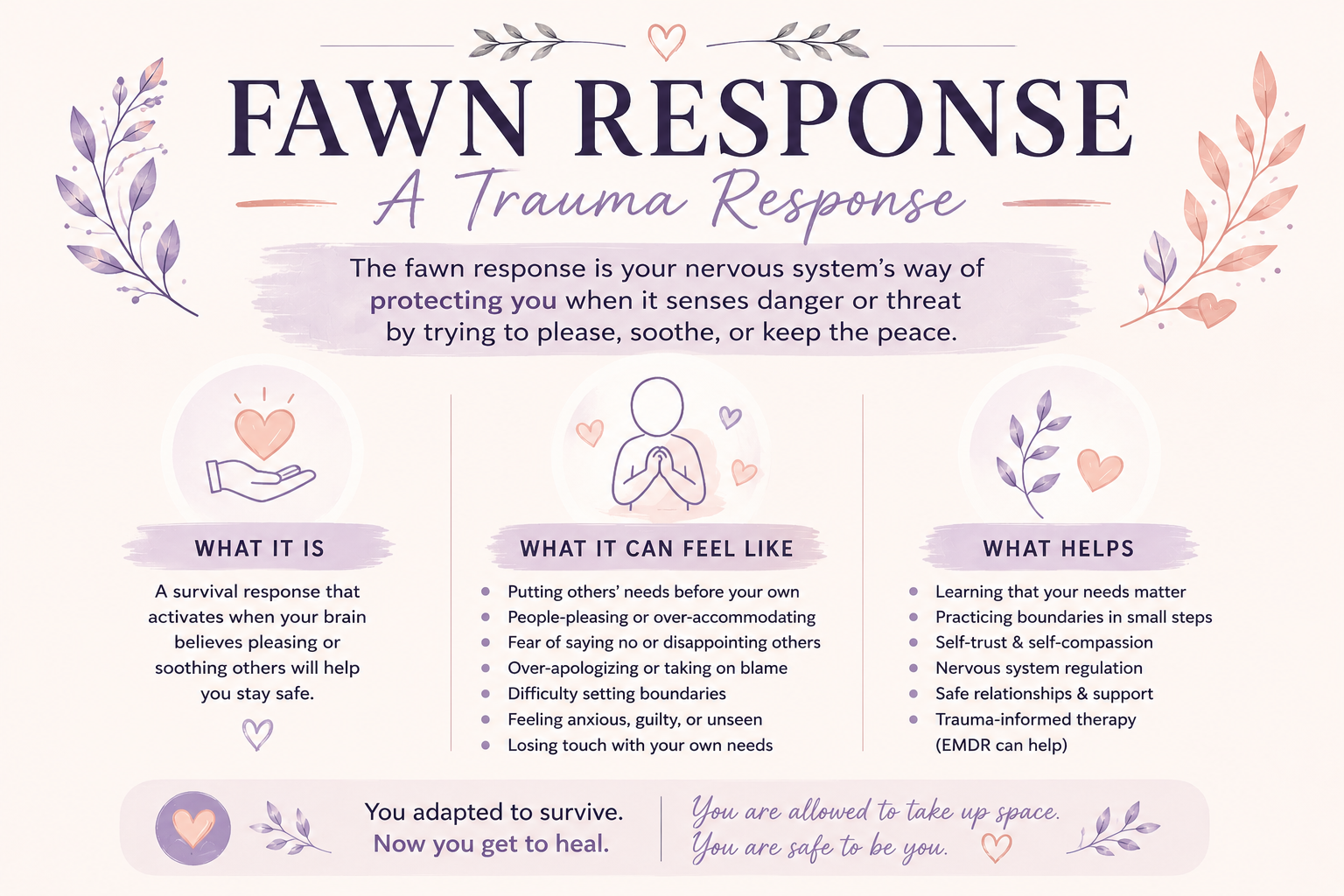
The fawn response is a trauma response where a person attempts to stay safe by pleasing, appeasing, soothing, or adapting to others.
Instead of fighting, fleeing, or freezing, the nervous system may try to survive by:
becoming agreeable
anticipating needs
avoiding conflict
apologizing quickly
minimizing personal feelings
smoothing over tension
caretaking emotionally
or becoming highly sensitive to another person’s mood
This response often develops in environments where love, safety, approval, or connection felt conditional.
The fawn response in narcissistic abuse
Narcissistic abuse often involves emotional unpredictability, criticism, blame-shifting, gaslighting, control, silent treatment, or emotional invalidation.
Over time, many people learn that the safest response is to:
stay calm
not upset them
explain carefully
avoid triggering anger
agree to avoid escalation
manage the other person’s emotions
or take responsibility even when something was not their fault
The nervous system may begin to believe:
“If I can keep them happy, I can stay safer.”
This is why fawning can feel automatic, even when you logically know you are allowed to have boundaries.
What the fawn response can feel like
The fawn response may feel like:
saying yes when you want to say no
feeling guilty for having needs
panic when someone is upset with you
over-explaining your feelings
apologizing even when you did nothing wrong
feeling responsible for keeping the relationship stable
suppressing anger or sadness
feeling selfish for setting boundaries
losing touch with what you actually want
monitoring someone’s mood constantly
or feeling like your safety depends on being easy to love
Many people later feel confused because they wonder:
“Why didn’t I just stand up for myself?”
But fawning is not weakness.
It is often a survival strategy learned in emotionally unsafe relationships.
How fawning protects the child
For children growing up around narcissistic or emotionally immature caregivers, fawning can become a way to survive.
A child may learn that safety depends on:
being “good”
being helpful
being easy
not having big emotions
keeping the parent calm
avoiding conflict
performing emotionally
In childhood, fawning may help reduce criticism, withdrawal, punishment, rejection, or emotional chaos.
The child may unconsciously learn:
“My needs are dangerous, but pleasing others keeps me connected.”
That pattern can follow people into adulthood.
Fawning and self-abandonment
The painful part of the fawn response is that it often requires self-abandonment.
You may become so focused on another person’s emotions that you lose touch with:
your needs
your anger
your boundaries
your preferences
your intuition
your body signals
or your sense of self
Many people in fawn patterns become very skilled at understanding everyone else while struggling to know what they feel themselves.
Fawn response and trauma bonds
The fawn response can become deeply connected to trauma bonds.
When a relationship includes cycles of harm, disconnection, reassurance, affection, and temporary repair, the nervous system may become focused on restoring connection at any cost.
This can make it difficult to:
leave
set limits
trust your perception
tolerate someone’s disappointment
or stop trying to earn emotional safety
Many people stay emotionally attached not because they are weak, but because their nervous system learned that connection equals survival.
Fawn response vs kindness
Being kind, thoughtful, generous, or emotionally sensitive is not the same as fawning.
Healthy care feels more like choice.
Fawning often feels like:
urgency
fear
guilt
anxiety
obligation
or emotional survival
The difference is not whether you care about others.
The difference is whether caring for others requires abandoning yourself.
Why boundaries feel so bad
For people with a strong fawn response, boundaries can feel emotionally dangerous.
Saying no may trigger:
guilt
panic
shame
fear of rejection
fear of conflict
fear of being called selfish
or fear that the relationship will collapse
This often happens because the nervous system learned that approval and connection depended on compliance.
Healing involves learning that boundaries are not cruelty.
They are part of emotional safety.
Healing the fawn response
Healing the fawn response often involves:
rebuilding self-trust
learning to recognize your own needs
practicing boundaries slowly
increasing nervous system safety
processing trauma
reconnecting with anger as information
reducing shame
and learning that love should not require self-erasure
The goal is not to become uncaring.
The goal is to care without disappearing.
EMDR and the fawn response
EMDR therapy can help people process the experiences that shaped fawning patterns.
This may include memories of:
emotional criticism
abandonment
childhood emotional neglect
or moments where having needs felt unsafe
As these experiences are reprocessed, many people notice greater ability to:
recognize their own emotions
tolerate conflict
set boundaries
trust their perception
and stay connected to themselves in relationships
You are allowed to stop disappearing
If you learned to survive by pleasing, appeasing, fixing, or keeping the peace, that response developed for a reason.
It may have helped you stay connected in environments where connection felt fragile, conditional, or emotionally unsafe.
But healing can help your nervous system learn something new:
You can be loved without abandoning yourself.