

Growing Up with Emotionally Immature or Narcissistic Parents
Why childhood patterns continue to shape adulthood—and how healing begins.
You don't have to figure this out alone.
If you're beginning to recognize narcissistic or emotionally immature parents, therapy can help you make sense of what you're experiencing.
Many adults don't realize they're still living by rules they learned in childhood.
Maybe you were the peacemaker.
The responsible one.
The invisible child.
The emotional caregiver.
The one who never wanted to make anyone upset.
You may have spent years believing:
"That's just how families are."
Only later do you begin to wonder...
"Why do I feel guilty all the time?
"Why can't I say no?"
"Why do I always feel responsible for everyone else?"
If this sounds familiar, your childhood may still be shaping the way you think, feel, and relate to others.
What Are Emotionally Immature Parents?
Emotionally immature parents often struggle to regulate their own emotions, take responsibility for their behaviour, or respond consistently to their children's emotional needs.
This doesn't necessarily mean they intended to cause harm.
But intent doesn't erase impact.
Children naturally adapt to the emotional environment they grow up in. When caregivers are unpredictable, critical, emotionally unavailable, or require their children to meet their emotional needs, those adaptations often continue into adulthood.
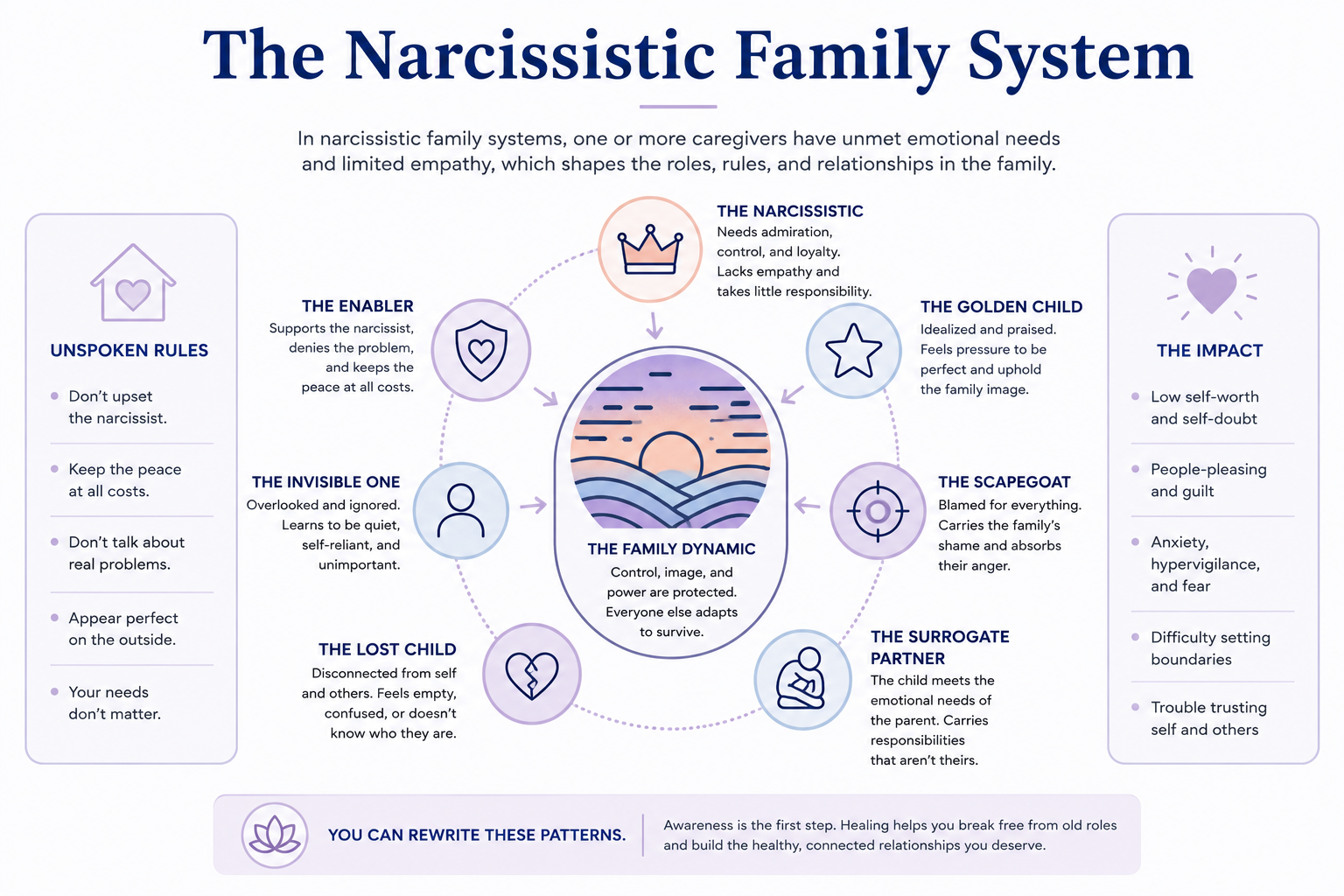
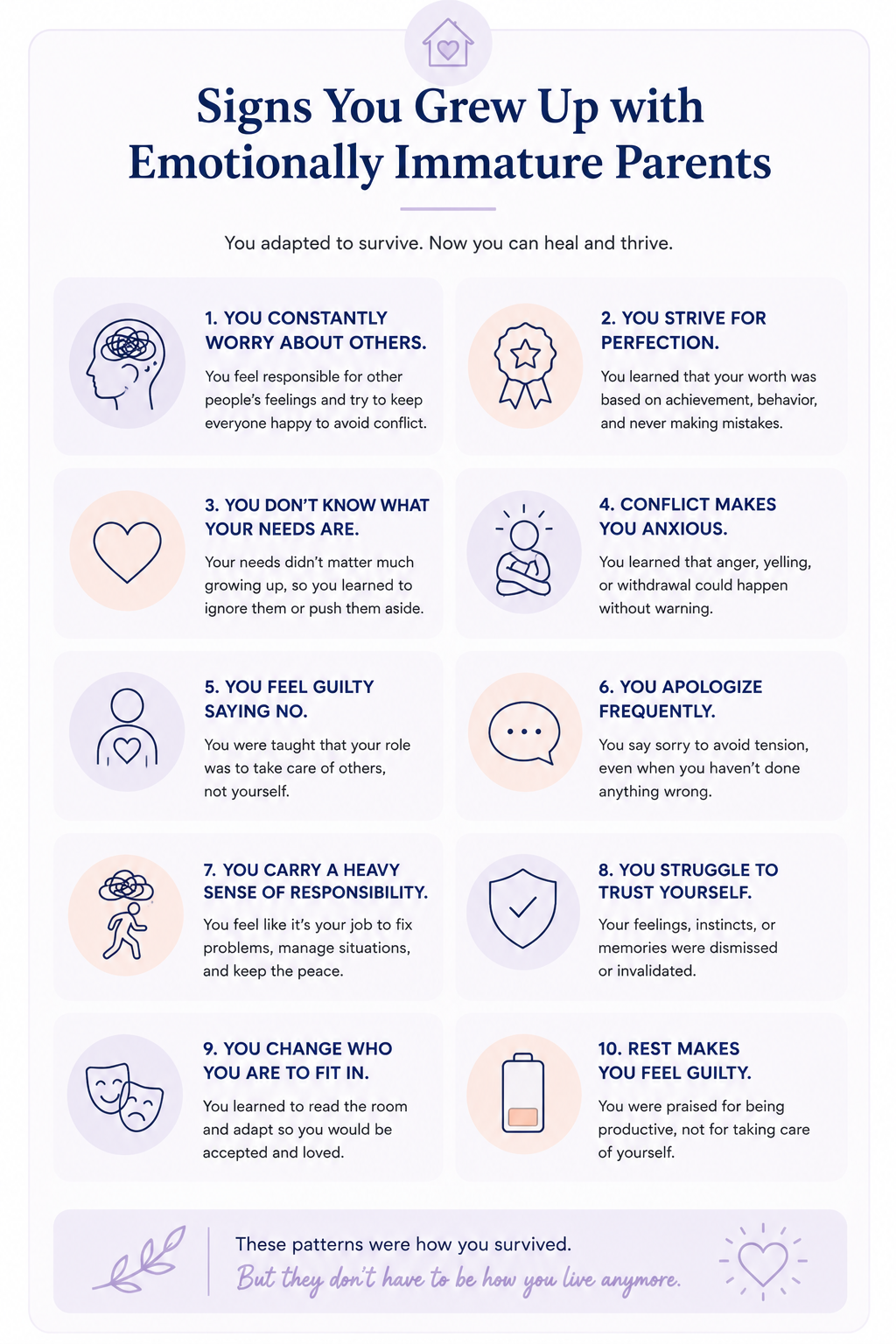
You Might Have Grown Up With Emotionally Immature Parents If...
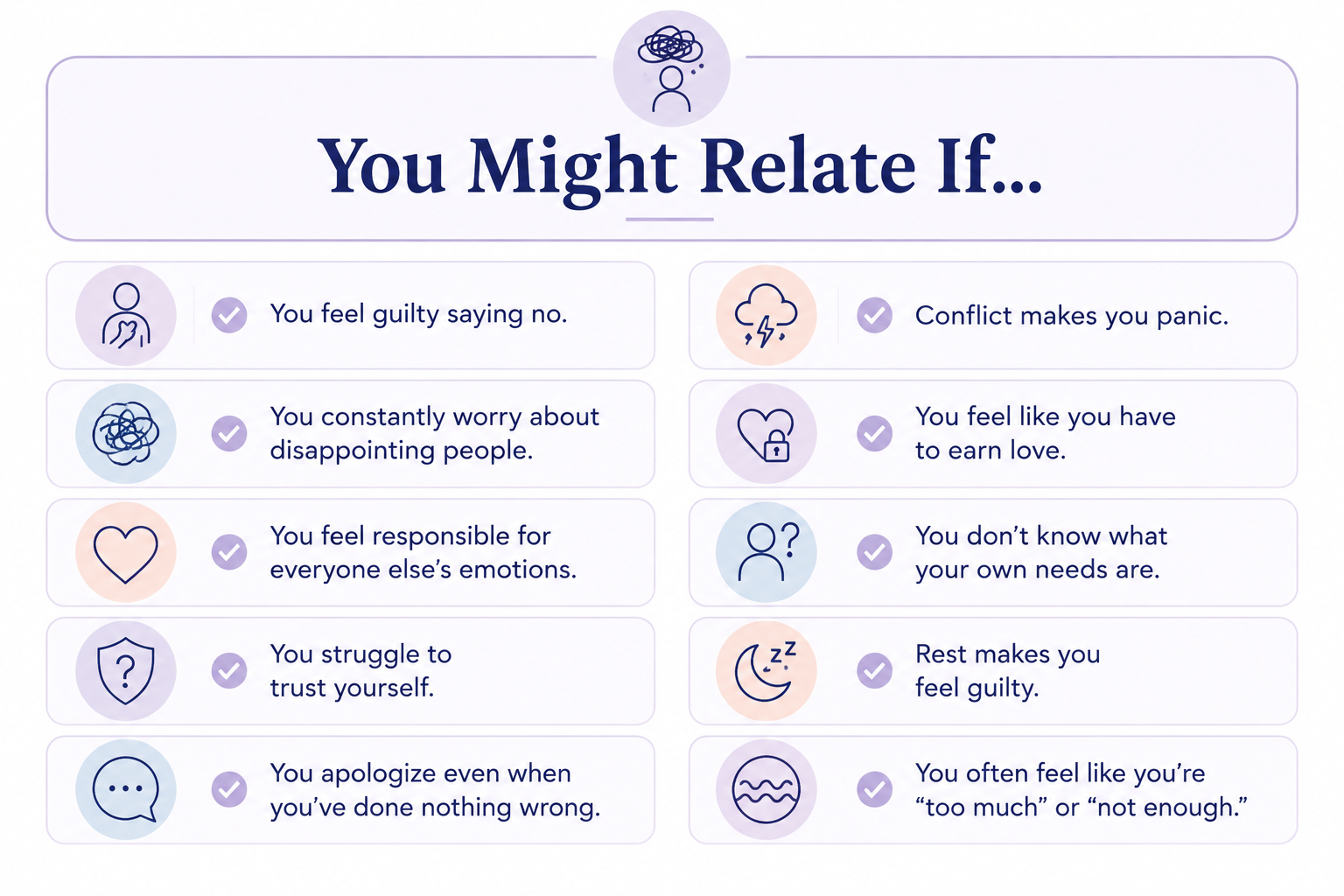
How It Can Affect You as an Adult
Growing up in an emotionally immature or narcissistic family can influence many areas of life.
Relationships
Difficulty trusting others
Choosing emotionally unavailable partners
Feeling responsible for keeping relationships together
Work
Perfectionism
Difficulty receiving feedback
Burnout
Overworking to prove your worth
Emotional Health
Anxiety
Shame
Chronic self-doubt
Identity
Many adults tell me:
"I don't even know who I am."
When your childhood focused on managing everyone else's emotions, there was often very little space to discover your own.
Understanding Your Family System
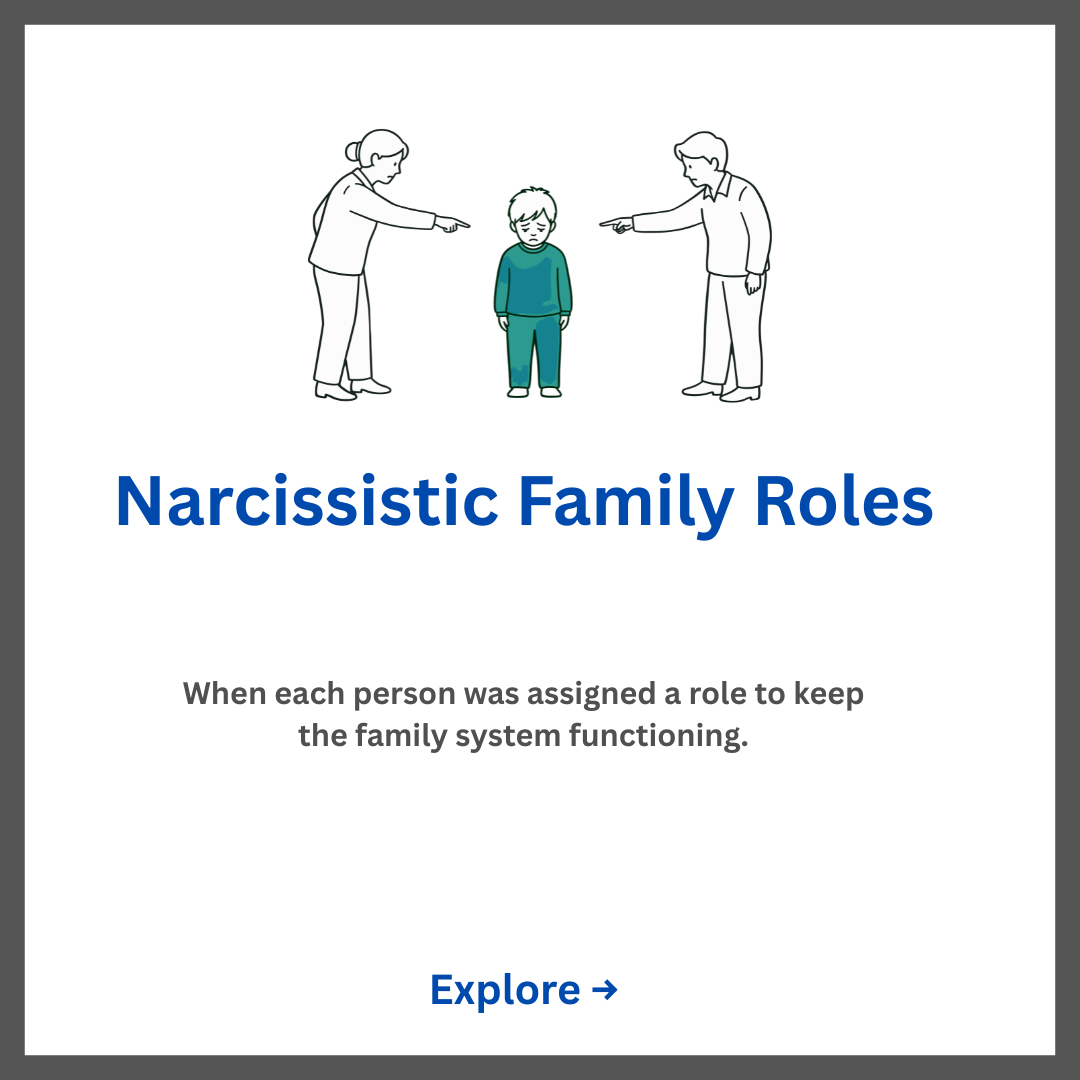
No two families are exactly alike, but many emotionally immature or narcissistic families develop predictable roles and patterns.
Explore These Topics:
What Happened in Your Family
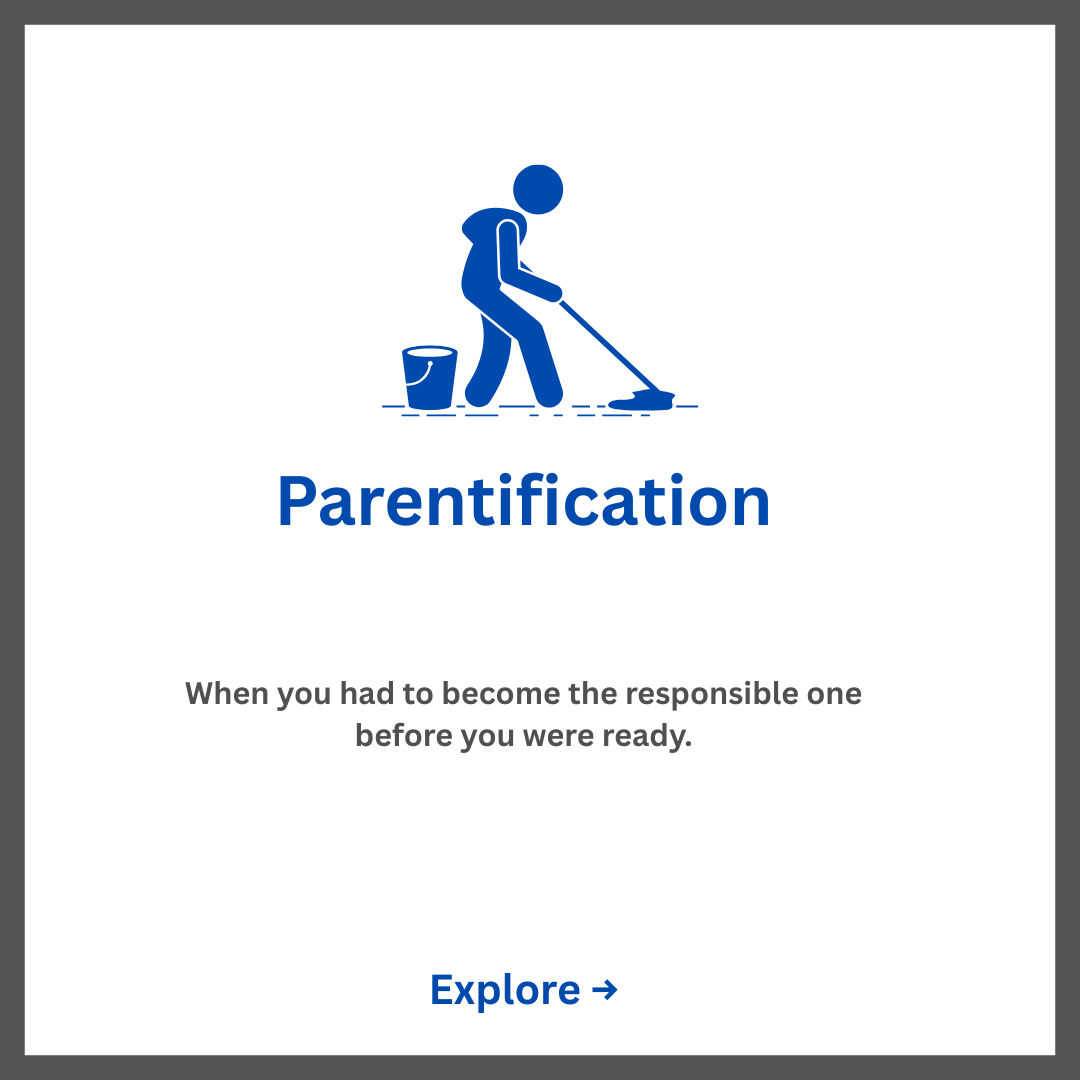
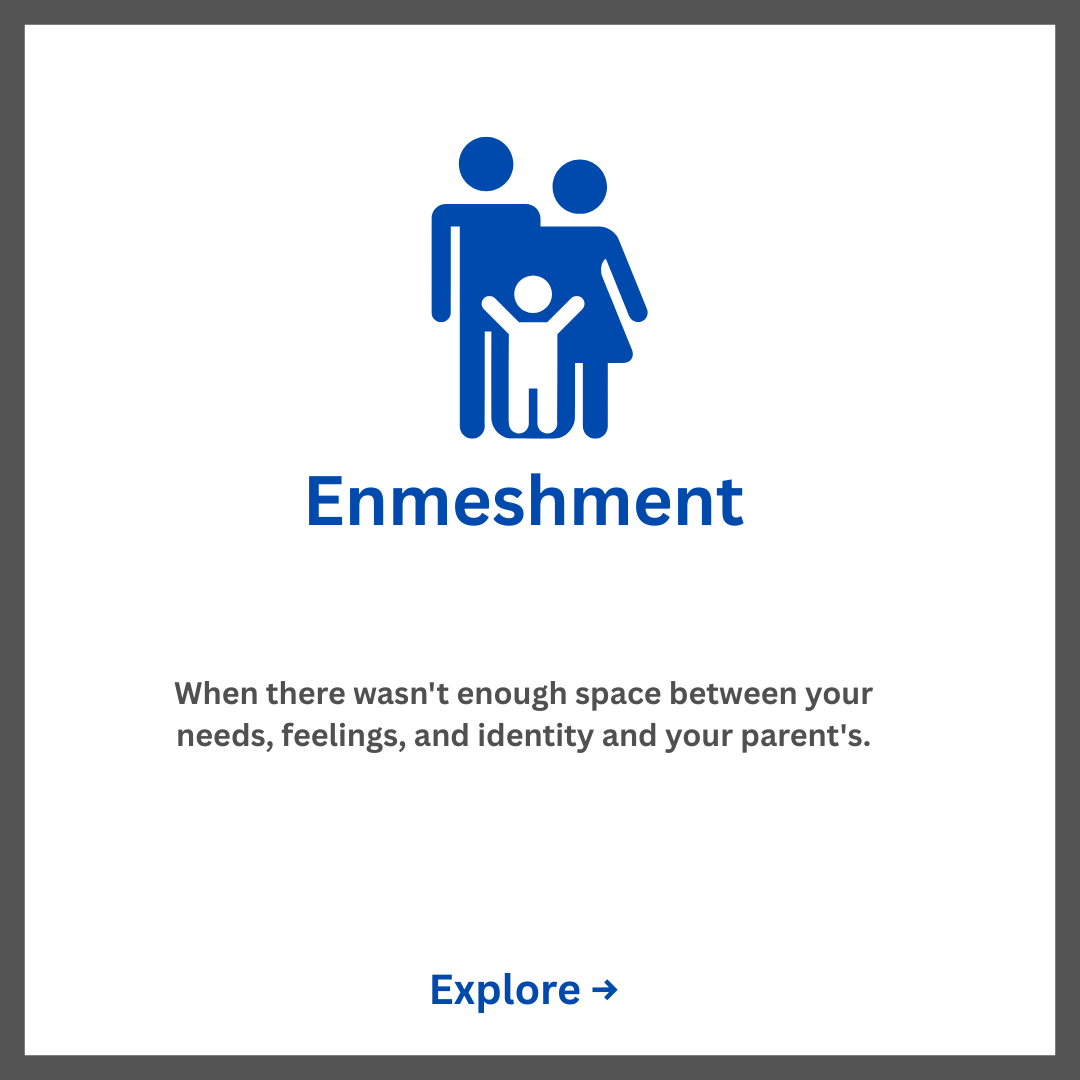
How You Were Treated
What You Learned to Do To Survive


Common Signs You Grew Up in an Emotionally Immature Family
Children learn the unspoken rules of their family.
Some common messages include:
Keep the peace.
Don't upset Dad.
Don't make Mom cry.
Your needs come last.
Be easy to love.
Don't talk about family problems.
Love means sacrificing yourself.
If someone is upset, it's your job to fix it.
As children, these rules helped you survive.
As adults, they can leave you anxious, exhausted, and disconnected from yourself.
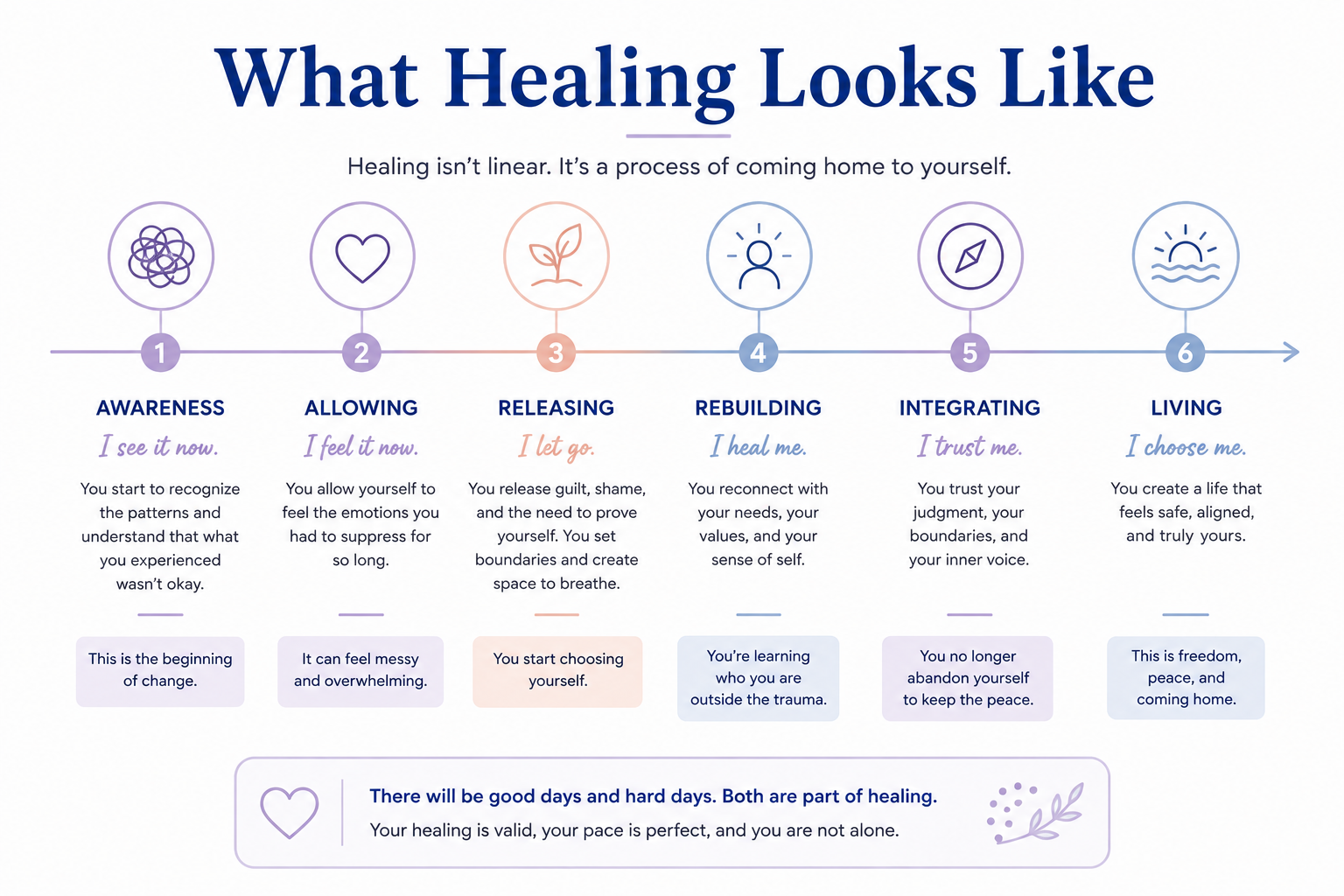
Why Healing Feels So Hard
Many people believe they should simply "move on."
But healing often involves grieving the childhood you didn't have.
You may find yourself grieving:
The parent you needed but didn't have.
The unconditional love you deserved.
The safety you longed for.
The version of yourself that had to grow up too quickly.
Healing isn't about blaming your parents.
It's about understanding how your experiences shaped you so you can begin making different choices today.
Can You Heal?
Yes.
Healing doesn't happen overnight.
But it is absolutely possible.
With the right support, many people begin to:
✔ Trust themselves again.
✔ Stop walking on eggshells.
✔ Set boundaries without overwhelming guilt.
✔ Feel calmer in relationships.
✔ Recognize manipulation more quickly.
✔ Build a stronger sense of self.
Recovery isn't about becoming a different person.
It's about reconnecting with the person you were before survival became your full-time job.
How Therapy Can Help
Therapy provides a safe space to understand the patterns you learned growing up and how they continue to influence your life today.
Together, we can explore:
Childhood experiences
Attachment wounds
Family roles
Emotional abuse
Nervous system regulation
Building healthier relationships
Using approaches such as EMDR, attachment-focused therapy, psychodynamic therapy, and somatic techniques, we work toward helping you feel safer, more connected to yourself, and more confident in your relationships.
You Deserve Relationships That Feel Safe.
Whether you're beginning to question a relationship...
Healing after leaving...
Or trying to understand your childhood...
You don't have to do it alone.
Your Questions, Answered
-
Yes. Many do. Love and emotional maturity are not the same thing. A parent may love their child deeply while still lacking the skills to respond consistently, regulate emotions, or meet emotional needs.
-
This guide isn't about assigning a diagnosis. Many of these patterns can occur in families where caregivers were emotionally immature, overwhelmed, emotionally unavailable, or struggling with their own unresolved trauma.
-
Yes. If you were taught that your role was to keep the peace or care for others, boundaries can feel uncomfortable at first. Guilt doesn't necessarily mean you're doing something wrong—it often reflects old survival strategies.