
EMOTIONAL ABUSE RECOVERY
Understanding Emotional Abuse, Why It's So Confusing, and How Healing Begins
You don't have to figure this out alone.
If you're beginning to recognize emotional abuse in your relationship or family, therapy can help you make sense of what you're experiencing.
You Know Something Isn't Right...
But You Can't Quite Explain Why.
Maybe no one has ever hit you.
There aren't obvious bruises.
From the outside, your relationship—or even your family—may look perfectly normal.
And yet...
You second-guess yourself.
You feel anxious all the time.
You're constantly trying to avoid conflict.
You replay conversations in your head.
You wonder if you're "too sensitive."
You feel like you've slowly lost yourself.
If this sounds familiar, you may be experiencing emotional abuse.
Emotional abuse can be difficult to recognize because it often happens gradually. Instead of one obvious event, it is typically a repeated pattern of behaviours that undermine your confidence, distort your reality, or leave you feeling afraid, controlled, or emotionally unsafe.
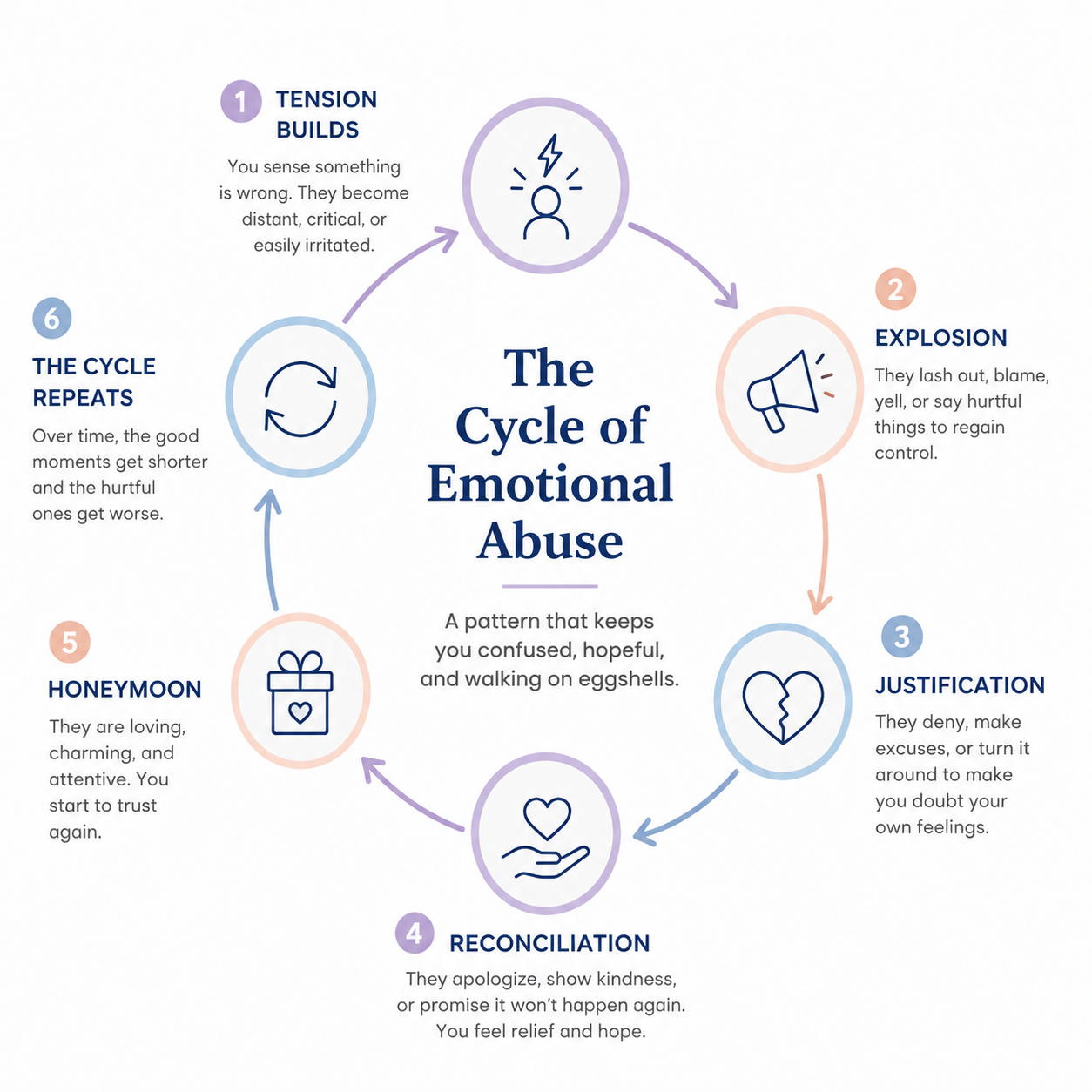
You Might Be Experiencing Emotional Abuse If...
Common Forms of Emotional Abuse
Emotional abuse can take many forms. Explore these topics in more depth.
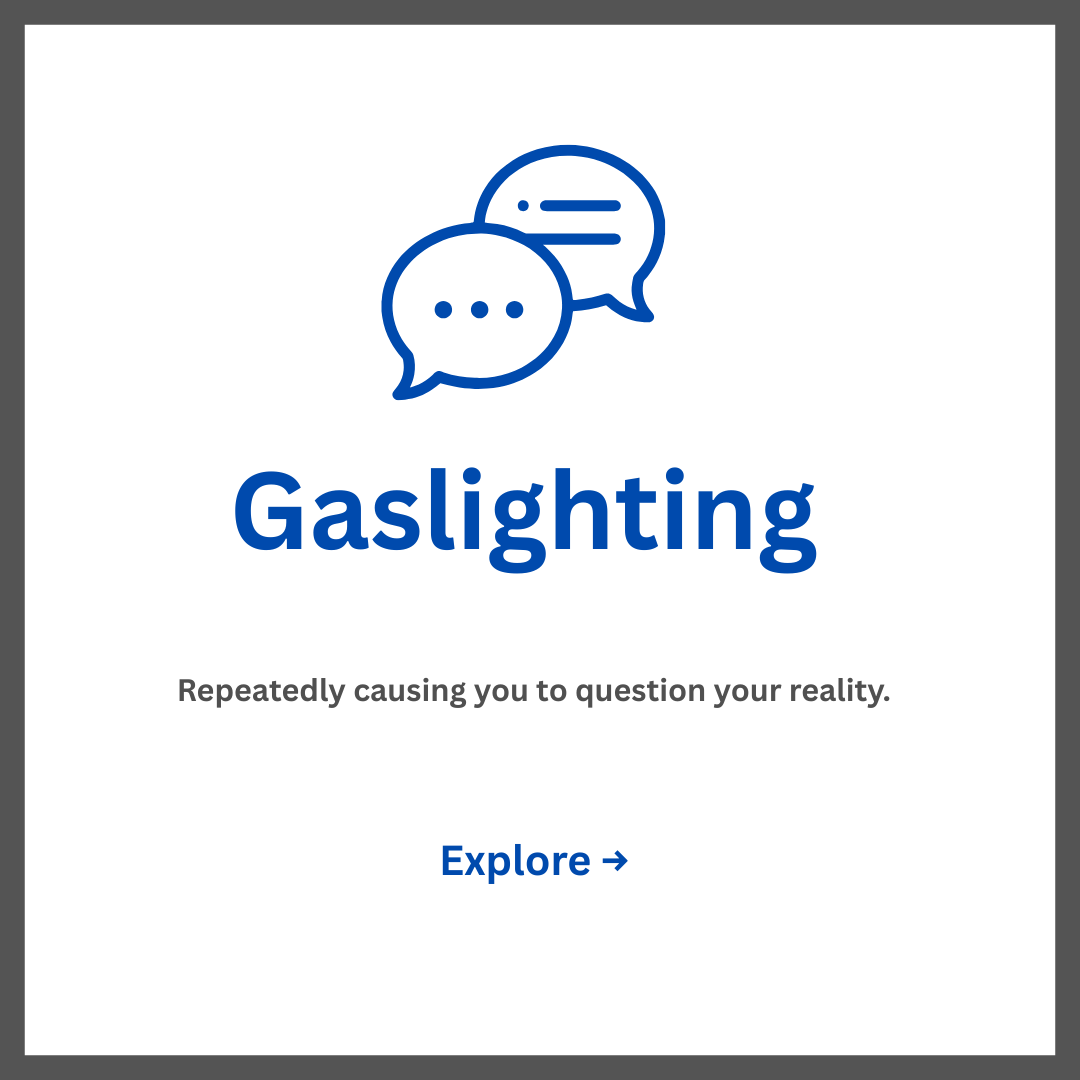



How Emotional Abuse Changes Your Nervous System
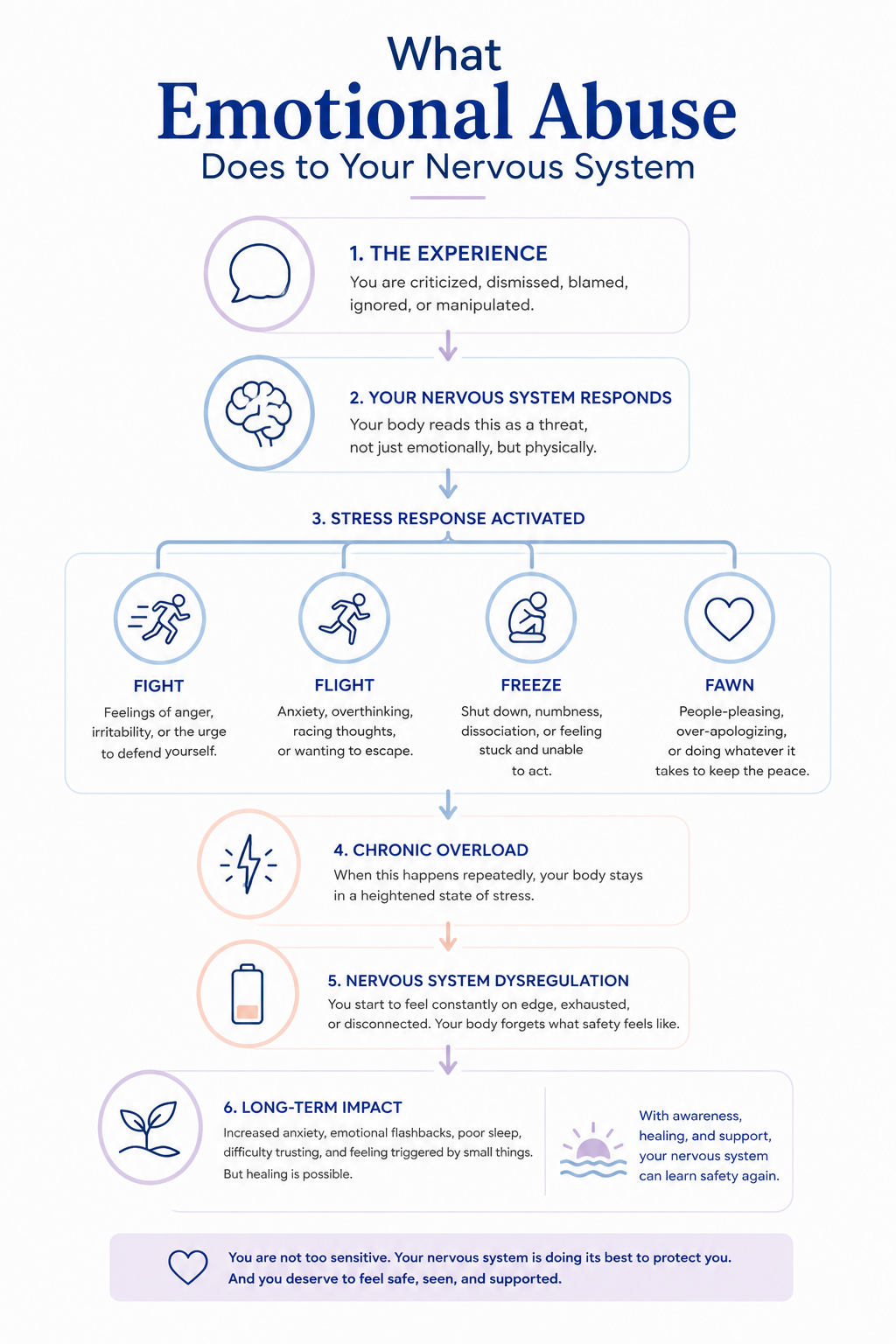
Many people believe they're "just anxious."
In reality, your nervous system may have spent years learning that relationships aren't emotionally safe.
That can look like:
Constant reassurance-seeking
Difficulty trusting yourself
Feeling guilty for having needs
These aren't personality flaws.
They're survival strategies.
The Hidden Effects of Emotional Abuse
The effects often continue long after the relationship ends.
You may struggle with:
Low self-esteem
Anxiety
Depression
Shame
Perfectionism
Relationship anxiety
Difficulty making decisions
Feeling disconnected from yourself
Trouble trusting healthy people
Healing isn't just about leaving.
It's about helping your nervous system learn that you're finally safe.
Can You Heal?
Yes.
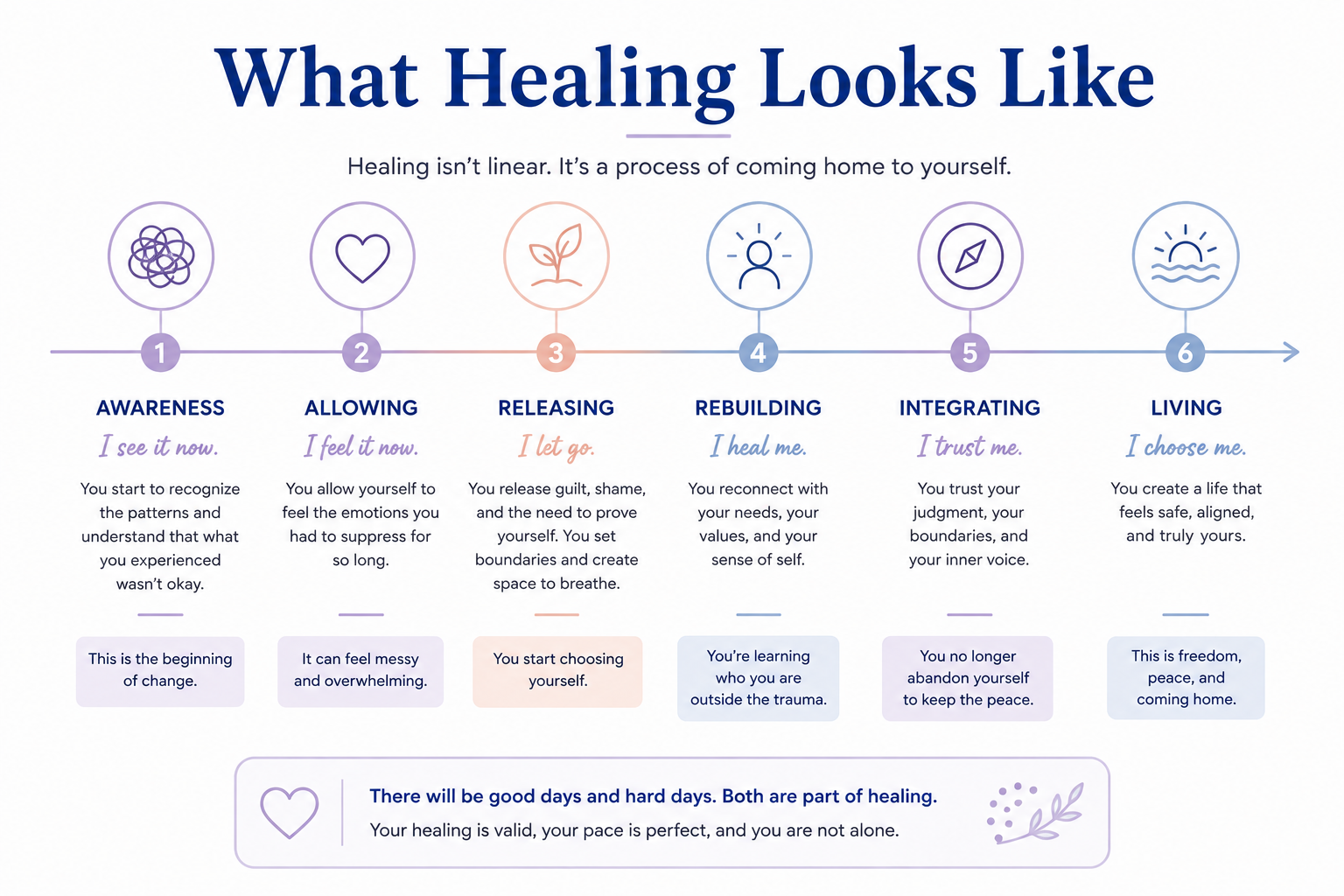
Healing doesn't happen overnight.
But it is absolutely possible.
With the right support, many people begin to:
✔ Trust themselves again.
✔ Stop walking on eggshells.
✔ Set boundaries without overwhelming guilt.
✔ Feel calmer in relationships.
✔ Recognize manipulation more quickly.
✔ Build a stronger sense of self.
Recovery isn't about becoming a different person.
It's about reconnecting with the person you were before survival became your full-time job.
How Therapy Can Help
Healing from emotional abuse often involves more than understanding what happened.
It involves helping both your mind and nervous system recover.
In my practice, I use evidence-based approaches including:
EMDR to process traumatic memories and reduce emotional triggers.
Attachment-focused therapy to understand how early relationships shape current patterns.
Psychodynamic therapy to explore long-standing beliefs and relationship dynamics.
Somatic approaches to help regulate the nervous system and reconnect with your body.
Together, we'll work to help you understand your experiences, rebuild trust in yourself, and create healthier relationships.
You Deserve Relationships That Feel Safe.
Whether you're beginning to question a relationship...
Healing after leaving...
Or trying to understand your childhood...
You don't have to do it alone.
Your Questions, Answered
-
Yes. Emotional abuse can have profound and lasting effects on mental health, self-esteem, relationships, and the nervous system. The absence of physical violence doesn't make emotional harm less real.
-
Many people stay because of hope, fear, financial dependence, children, trauma bonds, or because the abuse developed gradually. Leaving is rarely as simple as it seems from the outside.
-
Absolutely. Emotional abuse can occur in romantic relationships, families, friendships, and workplaces. Many adults continue to experience its effects decades after childhood.
-
If you're constantly questioning yourself, struggling with anxiety, feeling stuck in unhealthy relationship patterns, or trying to make sense of what happened, therapy can provide a safe space to understand those experiences and begin healing.