

The Freeze Response and Narcissistic Abuse
How freezing becomes a survival response in emotionally unsafe environments

How freezing becomes a survival response in emotionally unsafe environments
Many people who experienced narcissistic abuse or childhood emotional trauma blame themselves for:
shutting down
going quiet
feeling numb
struggling to speak during conflict
dissociating
“doing nothing”
or feeling unable to protect themselves.
But these reactions are often not weakness.
They are:
survival responses.
The freeze response is one of the nervous system’s automatic ways of protecting us when situations feel:
overwhelming
unsafe
emotionally threatening
unpredictable
or impossible to escape.
For many children growing up in narcissistic or emotionally unsafe environments, freezing became:
the safest available option.
What is the freeze response?
The freeze response is part of the body’s survival system.
When the nervous system perceives danger but believes:
fighting will not work
escaping is not possible
or emotional safety cannot be restored
the nervous system may move into:
shutdown,
immobilization, numbness,
dissociation,
or emotional collapse.
The freeze response is not laziness, weakness, or lack of caring.
It is a biological survival response designed to reduce danger and overwhelm.
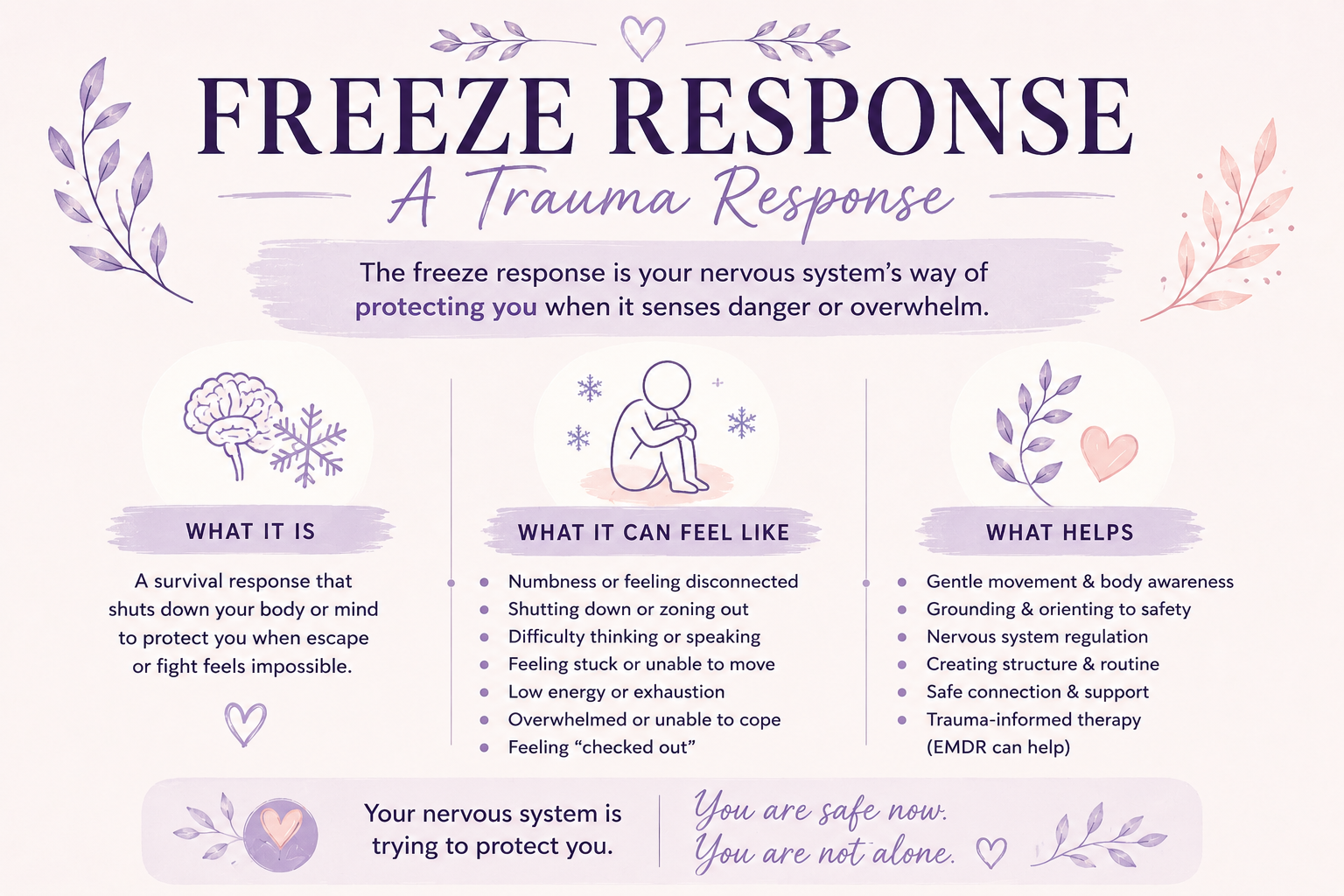
What the freeze response can feel like
The freeze response can feel like:
going blank during conflict
being unable to speak
numbness
dissociation
difficulty thinking clearly
emotional shutdown
feeling “stuck”
difficulty making decisions
people-pleasing through silence
inability to defend yourself
losing access to words
zoning out
exhaustion
or feeling disconnected from yourself or reality.
Many people later feel ashamed because they think:
“Why didn’t I say something?”
But freeze responses happen automatically.
The freeze response in narcissistic families
Children in narcissistic or emotionally unsafe families often learn that:
speaking up may lead to criticism
emotional expression may be punished
boundaries may trigger conflict
vulnerability may be unsafe
or their reality may be invalidated.
Over time, the nervous system may learn:
staying quiet increases safety.
Many children freeze because:
conflict feels dangerous
emotional unpredictability feels overwhelming
or they feel powerless within the family system.
The nervous system adapts by:
becoming smaller
quieter
less visible
emotionally disconnected
or hyper-attuned to danger.
How freeze protects the child
The freeze response often develops because the child’s nervous system recognizes:
“I cannot safely fight or leave.”
So instead, the body attempts to survive through:
shutting down
reducing emotional visibility
staying silent
emotionally disconnecting
avoiding attention
or becoming compliant.
Freezing may help the child:
avoid escalation
reduce emotional threat
stay emotionally invisible
avoid punishment
or survive overwhelming emotional environments.
Many children unconsciously learn:
“If I disappear emotionally, I may stay safer.”
Freeze and emotional invalidation
Children raised in narcissistic systems are often:
dismissed
criticized
ignored
blamed
gaslit
emotionally overwhelmed
or punished for emotional expression.
Over time, many children stop expressing:
anger
sadness
fear
needs
or boundaries altogether.
The nervous system begins prioritizing:
survival over self-expression
Freeze and dissociation
Some people experiencing freeze responses also experience:
dissociation.
Dissociation can involve:
feeling disconnected from yourself
feeling unreal
emotional numbness
memory gaps
zoning out
or feeling emotionally detached from experiences.
Dissociation is another protective survival mechanism.
When emotional overwhelm becomes too intense, the nervous system may disconnect from the experience in order to survive it.
Why freeze can continue into adulthood
Many adults raised in emotionally unsafe environments continue experiencing freeze responses in:
work environments
conflict
emotionally intense situations
or moments of perceived criticism or rejection.
People may notice:
shutting down during arguments
difficulty setting boundaries
inability to advocate for themselves
chronic people-pleasing
emotional numbness
procrastination
or feeling emotionally paralyzed under stress.
The nervous system may still react as though:
emotional danger is happening now.
Freeze and shame
Many people feel deep shame about freeze responses.
Especially when they compare themselves to people who:
fought back
left sooner
spoke up
or appeared more confident.
But freeze responses are not conscious choices.
They are:
automatic nervous system adaptations.
The nervous system did what it believed was necessary to survive overwhelming emotional environments.
Healing the freeze response
Healing often involves:
increasing nervous system safety
rebuilding self-trust
learning emotional regulation
reconnecting with emotions and body sensations
strengthening boundaries
processing trauma
and developing emotionally safe relationships.
For many people, healing means slowly teaching the nervous system:
“I am no longer trapped.”
EMDR and the freeze response
EMDR therapy can help people process
traumatic memories
emotional shutdown patterns
dissociation
attachment wounds
and nervous system activation connected to freeze responses.
As unresolved trauma becomes reprocessed, many people notice:
greater emotional presence
less shutdown
improved emotional regulation
increased ability to speak up
and greater nervous system flexibility.
You were protecting yourself
Many freeze responses began in environments where:
emotional safety was inconsistent
boundaries were unsafe
conflict felt dangerous
or your nervous system did not believe escape was possible.
Freezing was not failure.
It was protection.